
Koninklijk Concertgebouworkest data platform
Koninklijk Concertgebouworkest

We set up Microsoft Purview around the data people need to find or protect. For the Koninklijk Concertgebouworkest, we made scattered information easier to find.
For the Koninklijk Concertgebouworkest, we developed a data platform on Azure and Databricks, using Delta Lake and Unity Catalog. It connects, structures and standardises data from multiple systems and archives, making information easier to find within the organisation.
An analyst looks for the customer table and finds three. An export containing citizen service numbers sits in a shared folder, and no one knows which source a report uses. Purview maps it all out and labels sensitive data.
We register your sources, such as Azure SQL, SQL Server, SAP or your Fabric tenant, and schedule scans to retrieve schemas, classifications and lineage.
Purview reads Unity Catalog in Azure Databricks, including tables, columns and lineage. Unity Catalog also runs in the Koninklijk Concertgebouworkest's data platform.
A label such as Confidential appears in the metadata and stays with the file, including in Power BI, Fabric and supported exports.
In the Unified Catalog, you organise data by domain, such as finance or HR, with owners who manage data products and terms.
We choose one domain, such as finance, along with its sources, reports and owners.
We scan the sources, check the classifications and run automatic labelling in simulation mode first.
Owners and data stewards maintain data products, terms and labels. Then we move on to the next domain.
Your data is spread across several environments, such as SQL Server, SAP, Azure Databricks and Microsoft 365, and you want one place to see where sensitive data is stored and who owns it.
All your analytics data is in Microsoft Fabric. According to Microsoft, the OneLake catalogue is the first place to find and manage Fabric data; you add Purview for labels, DLP and auditing.
The number of sources and domains, whether systems on your own network require a self-hosted integration runtime, how many labels you need, and who will take on the owner and steward roles.
That happens when IT fills in everything and nobody in the organisation maintains it. That’s why each domain gets owners from the business, and we start with data people are already looking for.
Choose this if all your analytics data is in Fabric. You can find items, view lineage and work with domains and endorsement, without an additional product.
Choose this if your platform runs on Databricks. You can manage permissions, tags and lineage there at table and column level; see Databricks implementation.
Choose this if your data is spread across Fabric, Databricks, SQL Server and Microsoft 365. Our advice: use one catalogue and one set of labels, while keeping permissions specific to each platform.
Data Science Lab has worked with data and AI since 2016 and is a Databricks Partner and Microsoft Partner for Fabric. We’ve built data platforms on Azure for clients including Vivara and Koninklijk Concertgebouworkest.
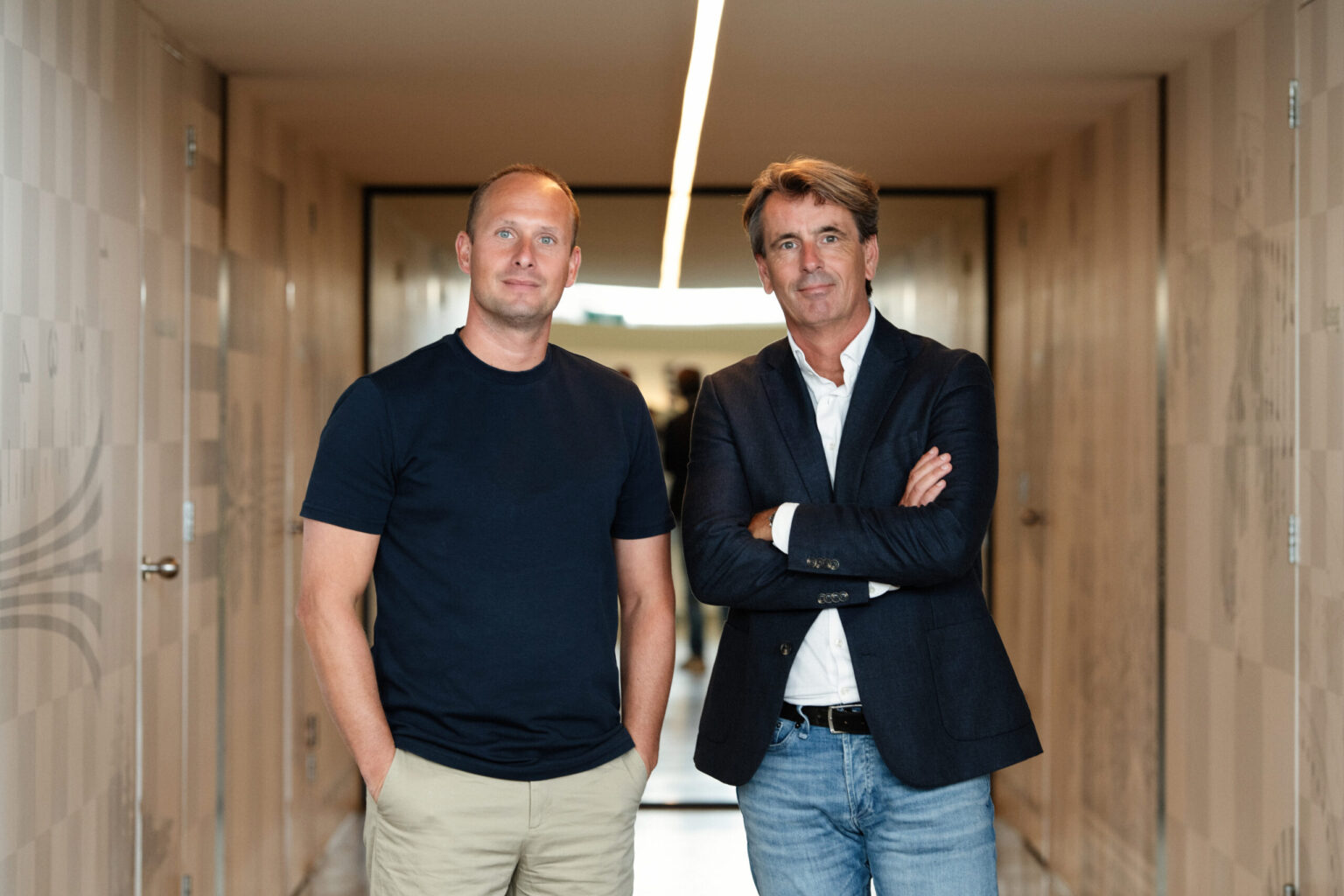
Stef is your first point of contact. In our first conversation, we’ll discuss your data sources, which data is sensitive and where to start.
E-mail info@datasciencelab.nl
Phone +31 (0)20 3636 724
Describe your sources and which data is sensitive. We’ll reply by email or arrange an initial conversation.
Message sent
Thanks for your message. We’ll be in touch as soon as possible.
Microsoft Purview is Microsoft’s suite of solutions for data security, data governance and compliance. It has two components for finding and managing data: Data Map, which uses scans and classification to retrieve metadata from your sources, and Unified Catalog, where people can search for data and request access.
Sensitivity labels, DLP and auditing are also part of Purview. But it is a tool: agreements on ownership and definitions belong in data governance, while the underlying platform is part of our data foundation.
Microsoft lists Azure SQL, SQL Server, Oracle, Snowflake, SAP ECC, SAP S/4HANA, Salesforce, Power BI and Fabric, among others. For systems on your own network, you install a self-hosted integration runtime, sometimes with additional drivers.
For Azure Databricks, Purview reads from Unity Catalog: catalogues, schemas, tables, views and columns, plus lineage from notebook runs. Note that if you delete a table from the source, it will not automatically disappear from Purview during the next scan.
A classification identifies what a column contains, such as a name or a credit card number. Purview has more than 200 built-in classifications, and you can create your own using a pattern or a list of terms. A sensitivity label indicates how sensitive something is, such as Public or Confidential, and can enforce encryption or a watermark.
Labels appear in the metadata and stay with the content. In Fabric and Power BI, you can apply them to reports, semantic models and lakehouses; anyone applying labels in Power BI needs a Pro or PPU licence.
Yes. In Word, Excel, PowerPoint and Outlook, a label can be suggested or applied while someone is working; for SharePoint, OneDrive and Exchange, a policy runs in the background. A sensitive information type can identify a Dutch citizen service number, for example, from its pattern, check digit and nearby keywords.
Run such a policy in simulation mode first. That lets you see which files would receive a label before it is applied, so you can adjust rules that are too broad or too narrow.
Fabric has its own governance: the OneLake catalogue, with domains, endorsement and lineage. Microsoft describes it as the first place to manage Fabric data. Purview adds sensitivity labels for all Fabric items, DLP policies for lakehouses, warehouses and semantic models, and an audit log of user activity.
To read how we set up a Fabric environment with workspaces, permissions and labels, see Microsoft Fabric implementation.
Purview shows where personal data is stored, such as Dutch citizen service numbers in tables or exports. This helps you determine what data you process and where. Your data protection officer or legal adviser should assess what the GDPR requires of you.
Microsoft 365 Copilot and agents recognise sensitivity labels and take labelled data into account during use. It is therefore best to set up labels before rolling Copilot out widely. For agreements on AI use, see AI governance.
We are a Microsoft Partner for Fabric and a Databricks Partner, and we build data platforms on Azure, including for Vivara and the Koninklijk Concertgebouworkest. Purview fits with those platforms because it can scan Unity Catalog and Fabric. We do not yet have a separate Purview case study among our case studies.
If we set up the platform, we can also manage it afterwards through management and continuous improvement.
If your data sits in a single Fabric environment or a single Databricks workspace, the OneLake catalogue or Unity Catalog will often already cover discoverability and permissions. And if no one is willing to take ownership of a domain, a scan will only populate a list that nobody maintains.
Start with the agreements instead: who manages which data, and what does each term mean? If the data itself is unreliable, first read about data quality.