
Automating respondent research with our topic classification model
WUA

We select an open model based on your test set and put it into production, with versioning and evaluation. For WUA, we built a bespoke language model.
"Close communication and detailed sprint reviews ensured the model met our needs exactly […]" Yannick Ludwig, Head of Product, WUA
Open models have become capable enough for many tasks: summarising, classifying, extracting information and answering questions from documents. You decide where a model runs and which version you use. Whether it is good enough for your task only becomes clear with your own examples.
Open-weight does not always mean open source. We check the terms of use: commercial use, user numbers and what you can do with the output.
We test two or three candidates on the same questions from your work and compare them with a cloud model. That’s how we built a model for WUA that met their needs.
First, we use prompts and your own documents. We only fine-tune if the task calls for it and there are enough good examples.
Every model, prompt and setting has a version. A new model version only goes live after the same evaluation.
What is the task, what level of quality is good enough, and which examples make up the test set? Also: which licences are ruled out?
Candidates are run on the same test set, with quality, speed and computing power compared side by side.
The model runs behind a dedicated endpoint, with logging, evaluation at every update and a designated owner.
You want to decide where the model runs, you have a well-defined task with high volume, or you don’t want to depend on one provider’s pricing and model versions.
You have low volume and varied tasks that call for the best cloud model. In that case, a cloud model in an EU region is simpler and often better.
How many tasks and languages are involved, whether you want to host the model and data yourself, whether fine-tuning is needed, and who will manage it after launch.
For broad, creative tasks, the largest cloud models are often ahead. For a well-defined task with a good test set, the difference can be small. We measure it rather than assume.
Choose this if quality across a broad range of tasks takes priority and an EU region with suitable agreements is sufficient. It’s the quickest route to going live.
Choose this if you want an open model but don’t want to manage GPUs. Our advice: start here and measure whether the model can handle your task.
Choose this if your data must not leave your environment or the volume is high. See how it works in running an LLM locally.
Data Science Lab has worked with data and AI since 2016, as a Microsoft Partner and Databricks Partner. We choose models based on tests using your own examples, as we did when we built a bespoke model for WUA.
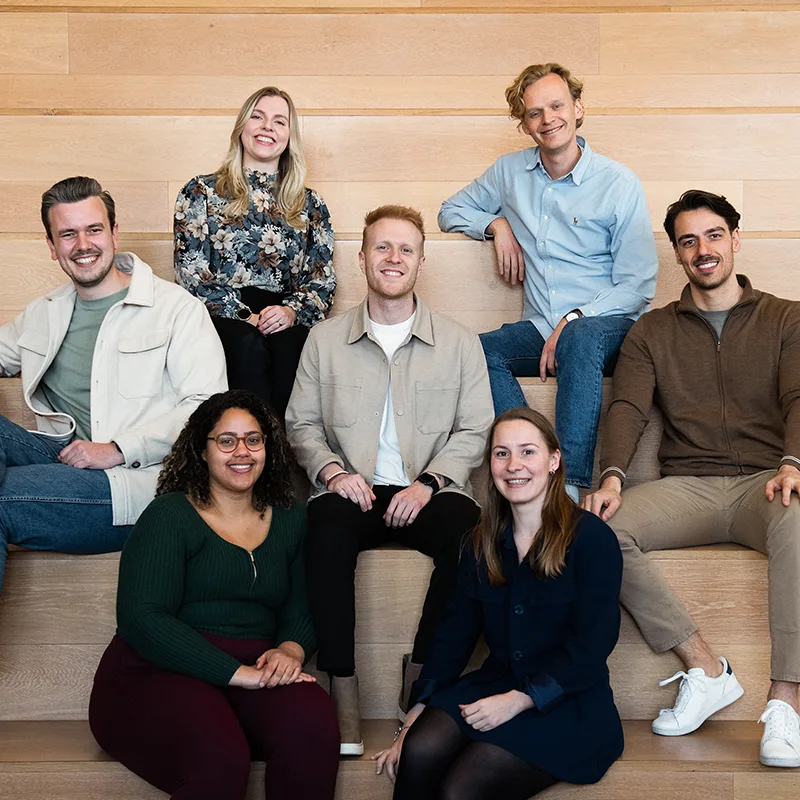
Stef is your point of contact. In the first meeting, we’ll decide which task an open model should perform and how we’ll evaluate it.
E-mail info@datasciencelab.nl
Phone +31 (0)20 3636 724
Describe the task, the volume and where the model can run. We’ll reply by email or arrange an initial conversation.
Message sent
Thanks for your message. We’ll be in touch as soon as possible.
A language model whose weights you can download, so you can run and adapt it yourself. Well-known model families include Llama, Mistral, Qwen and Gemma.
Strictly speaking, many of these are open-weight: the weights are freely available, but the training data and code are not always available, and the licence may impose conditions.
Check whether commercial use is allowed, whether there is a limit on the number of users, what you can do with the output and whether you need to credit the model. Some models have an Apache 2.0 licence; others have a licence set by their creator.
The legal assessment is for your lawyer; we set out the terms for each candidate.
Use your own test set: examples from your work, each with the correct answer. Every model gets the same questions, and we measure quality, speed and the computing power required.
Online rankings can point you in a direction, but they say little about your task in Dutch.
Usually not as a first step. Good instructions and access to your own documents through RAG can solve many problems. Fine-tuning helps with a specific task that requires a particular style or format, provided you have hundreds of good examples.
Techniques such as LoRA make this less resource-intensive, but the model must then be evaluated again.
On your own hardware, on GPUs from a cloud provider in an EU region, or through a managed service that offers open models. The choice depends on volume, data sensitivity and who handles management.
We cover the considerations around using your own hardware in running an LLM locally.
The model runs behind a dedicated endpoint with a serving layer, such as vLLM, that can handle multiple requests at once. Around it, you need access controls, logging of questions and answers, and monitoring of speed and errors.
This lets an application call the model just as it would a cloud API.
Nothing automatically. The new version is first run against the same test set. If it performs better on your task, it goes live as a fixed version; if not, the old version stays in place.
This prevents answers from changing unnoticed.
It gives you more control over where data and logs are stored. But risks such as prompt injection and incorrect answers remain, and you are now responsible for managing the model.
We discuss where the model and data are hosted and who has access in private AI and under generative AI.