
An efficient, centralised service desk with our self-learning chatbot Dex, which answers FAQs quickly
PostNL

We choose the right approach for each source: searching documents or running calculations on numerical data. For PostNL, we connected chatbot Dex to existing systems.
This means the knowledge base doesn’t need to be stored and maintained in multiple places. Employees ask their questions in one central place, leaving service desk staff more time for complex issues.
De kennis staat in SharePoint, handleidingen en mailboxen, de cijfers in ERP en CRM. Een algemene chatbot kent geen van beide. AI met bedrijfsdata laten werken betekent: de juiste bron aansluiten, met de rechten die al gelden.
Policies, manuals and contracts become searchable, and AI answers with a reference to the source. This is called retrieval-augmented generation, or RAG.
A question such as ‘revenue by region last month’ becomes a query against your data platform or semantic model, not a guess by a language model.
Dex for PostNL is connected to existing systems, so the knowledge base does not need to be maintained in multiple places.
If someone cannot see a document or table now, they cannot see it through AI either. We set this up for each source.
What questions should the AI answer, and which documents or systems hold the answers?
For each source, we choose between searching documents and querying numerical data, while applying existing access permissions.
Test questions with known answers, and a fixed refresh schedule so new documents and figures are included.
The knowledge or figures already exist in documents, SharePoint, a database or a data platform, but staff struggle to find them. Someone also knows which source is authoritative.
The information does not yet exist or is only in people’s heads, or the figures in the source are inaccurate. In that case, start with data quality or documenting the knowledge.
How many sources and systems are involved, whether they can be connected, how granular the access permissions are, how often the content changes, and whether you’re dealing with documents, figures or both.
That depends on where the model runs: in your own cloud environment, in an EU region or on your own servers. We make that decision in advance with your IT team and your privacy officer.
Choose this if the answer is in written material: policies, manuals or contracts. To see how it works technically, read about RAG implementation.
Choose this for questions about quantities, amounts and trends. The AI queries your data platform or semantic model, using the same definitions as your reports.
Choose this if your colleagues ask both kinds of questions. Our advice: start with the source that covers most questions, then add the second once the first is giving reliable answers.
Data Science Lab has worked with data and AI since 2016 and is a Microsoft Partner and Databricks Partner. We build data platforms and the AI applications that run on them, such as Dex for PostNL.
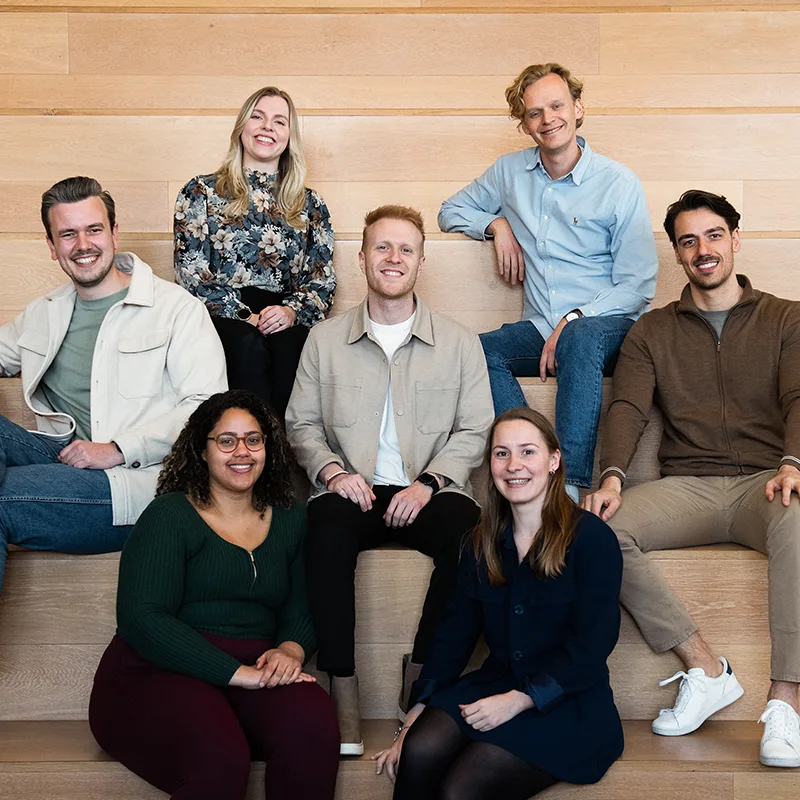
Stef is your point of contact. In our first conversation, we’ll discuss your sources, the questions you have about them and access rights.
E-mail info@datasciencelab.nl
Phone +31 (0)20 3636 724
Tell us what the sources are and which questions they need to answer. We’ll reply by email or arrange an initial conversation.
Message sent
Thanks for your message. We’ll be in touch as soon as possible.
Ja. Een taalmodel kent je organisatie niet, maar je kunt het laten werken met je eigen documenten en systemen. Het zoekt dan eerst in jouw bronnen en baseert het antwoord daarop, met de bron erbij.
Dit is een van de toepassingen van generative AI.
Het principe is bij elk taalmodel hetzelfde: je traint het model niet bij, maar geeft het bij elke vraag de relevante stukken uit je bronnen mee. Welk model je kiest, bepaalt mede waar je gegevens heen gaan.
ChatGPT is een product van OpenAI. Wij leveren het niet; we bouwen de koppeling tussen een taalmodel en je bronnen.
RAG zoekt in teksten: het knipt documenten in stukken, vindt de passages die bij de vraag passen en laat het model daaruit antwoorden. Bij vragen over cijfers schrijft de AI een query op je dataplatform of semantisch model, en rekent de database het antwoord uit.
De techniek van RAG staat bij RAG implementatie.
Documenten en mappen, SharePoint en Teams, intranet en kennisbanken, en systemen als ERP en CRM, via hun API of via het dataplatform waar die data al staat. Of een bron aan te sluiten is, hangt af van de koppeling die het systeem biedt.
Bij onze assistent Joost kies je zelf welke interne bronnen hij doorzoekt.
Dat moet, en dat regel je per bron. Bij documenten neem je de rechten mee in de zoekindex, zodat iemand alleen passages terugkrijgt uit stukken die hij nu ook mag openen. Bij cijfers gebruik je de beveiliging op rijniveau van het dataplatform.
Zonder die stap kan een assistent gevoelige stukken laten zien aan collega’s die ze niet mogen lezen.
Zo actueel als de laatste verversing. Een zoekindex op documenten werk je bij zodra stukken veranderen of verdwijnen; een query op cijfers leest de data zoals die op dat moment in het platform staat.
Verouderde documenten in de bron geven verouderde antwoorden. Opschonen hoort daarom bij de start.
Dan geeft de AI net zo goed foute antwoorden, alleen overtuigender. Dubbele versies van een handleiding, velden die per afdeling iets anders betekenen of ontbrekende waarden: dat los je op in de bron, niet in de AI.
Hoe je dat aanpakt, staat bij datakwaliteit.
Als de vragen weinig voorkomen, als een zoekfunctie of een dashboard ze al goed beantwoordt, of als bronnen elkaar tegenspreken zonder dat iemand bepaalt welke leidend is.
Gaat het je vooral om een assistent die vragen beantwoordt, kijk dan bij AI chatbot laten maken.