
Working responsibly and practically with AI at Amsterdamse Federatie van Woningcorporaties
de Amsterdamse Federatie van Woningcorporaties

We teach your team to work with AI and build applications that last. At AFWC, staff built their own agent during our training.
The AFWC wanted everyone to understand how AI works and be able to use it in their own work. In the second, hands-on half-day session, participants worked with their own sources, explored different models and built their own agent.
One-off experiments with chatbots raise questions about privacy, costs and what is or isn’t sensible. An application you can rely on needs people who understand it and someone to build and maintain it.
For AFWC, we based the exercises on participants’ own tasks, such as replying to an email and writing meeting minutes.
For PostNL, we developed Dex, a self-learning chatbot that gives employees a central place to ask questions and connects to existing systems.
For Harman, we developed a selection process using GenAI and an LLM to assess submissions objectively and reproducibly.
We maintain what we build: test questions after every change, logging, and a clear agreement on who makes adjustments.
How language models work, where they go wrong, and practice with tasks from your team’s own work.
From what participants bring to the training, we choose the task that comes up most often, with someone on your team taking ownership.
The application in your environment, tested by users and then maintained by us or your team.
Your employees are already using AI on their own, there are questions about privacy and what makes sense, and you want to move towards a few applications that everyone uses and someone manages.
You only need a licence for a chatbot, without customisation or training. In that case, the tool’s supplier is your first point of contact. We’ll tell you that upfront.
The number of participants and teams, whether an application using your own sources will follow, which systems we connect, who can see which data and who takes over management.
We’ll work that out with your IT team and privacy officer beforehand. At AFWC, all training materials were fictional. We also investigated the questions about privacy and data storage and answered them with supporting sources.
Choose this if employees already use AI but aren’t sure how to use it appropriately. Everyone practises with their own tasks and learns what they can and cannot do.
Choose this if one clearly defined task takes up a lot of time every day. We build the application in your environment and maintain it.
Choose this if you don’t yet know where AI will bring the most value. Our advice: use the training to identify tasks that warrant a dedicated application.
Data Science Lab is a Databricks and Microsoft partner based on Westerdoksdijk. We trained AFWC, built Dex for PostNL and share what we learn at our Techdays.
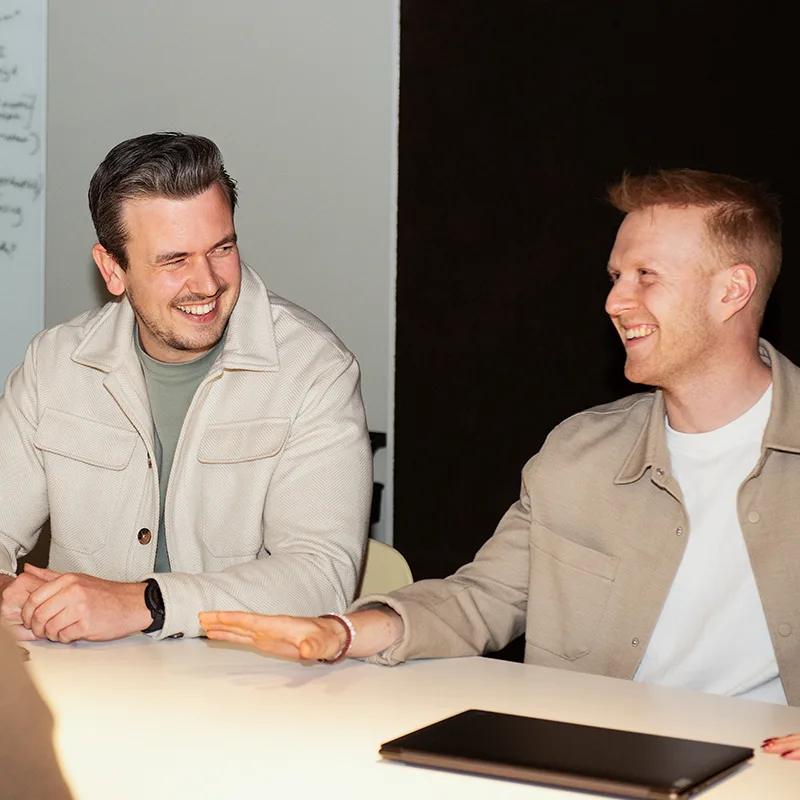
Stef is your first point of contact. In our first conversation, we’ll discuss where you currently use AI and whether training or an application is the best place to start.
E-mail info@datasciencelab.nl
Phone +31 (0)20 3636 724
Tell us how many people are involved and which tasks you have in mind to start with. We’ll reply by email or suggest an initial conversation.
Message sent
Thanks for your message. We’ll be in touch as soon as possible.
In two connected ways: helping employees use language models and agents responsibly, and building and managing applications that remain useful afterwards, such as an assistant that draws on your own sources.
If you’re looking for an AI company or AI agency in Amersfoort or Eemland, that’s the work we do. You’ll find the full overview under AI applications.
No. We work from Westerdoksdijk in Amsterdam. We come to you for training or user testing; the rest can often be done online.
None of the case studies here took place in Amersfoort; they show what we do. If you’re mainly looking to measure or predict something, read about our data science consultancy in Amersfoort.
At the AFWC, the first half-day focused on understanding how language models work, where they go wrong, what the law requires and how much energy AI uses. The second was practical: writing prompts, incorporating your own sources, choosing models and building your own agent.
You can read about the structure in the AFWC case study.
An agent carries out a sequence of steps, such as looking up information, drafting a response and preparing it for use. At first, it makes suggestions and an employee approves them. You only let it do more on its own once it’s clear which actions are permitted and every action is traceable.
Read more about agentic AI.
Yes. For PostNL, we developed Dex, a self-learning chatbot connected to existing systems, so the knowledge base doesn’t have to be maintained in multiple places. Employees have one central place to ask questions.
For more on language models, read about generative AI.
Test it against a fixed set of examples assessed by your own people, then rerun those tests after every change. For Harman, a selection process using GenAI and LLMs assesses submissions in the same reproducible way.
That lets you see whether a new model or a different prompt works better or worse.
You need to establish what data an application uses, where it runs and who checks its outputs. Personal data often calls for a DPIA; what we provide for that is set out under DPIA for AI.
Read about what the law requires of organisations using AI under the AI Act. We don’t provide legal advice.
We agree on that before we start: an owner in your organisation, someone to alert if the results look unusual, and a defined process for releasing a new version. We can handle maintenance, or your team can take over.
We arrange ongoing maintenance through management and continuous improvement.