
Insight into actual passenger numbers using computer vision
GVB

We build computer vision solutions, document processing tools and agents for operational teams, and manage them over time. For GVB, our software counts passengers in camera footage.
GVB counted passengers manually: a labour-intensive, error-prone process that provided only a snapshot in time. We developed software that can take over this task, using computer vision on footage from security cameras inside a vehicle. The footage is not viewed or shared; it is only analysed by the model.
At manufacturers and suppliers in Brainport, people inspect parts, read work orders and search through specifications. A model or agent can count, inspect or make a suggestion. But it only keeps working if someone manages it.
For GVB, we developed software that uses computer vision to count passengers in security camera footage, without anyone having to watch it.
For Floating Farm, we installed the cameras ourselves and implemented a computer vision model that provides insight into the feeding process.
Our AI model for Fokker Services Group calculates the expected invoice amount based on the work delivered, so only invoices with discrepancies need to be reviewed by an employee.
After deployment, we keep the model under review: managing versions, monitoring for drift and retraining when the camera, product or process changes.
Which task does AI take over, what images or documents are available, and how do we measure whether it gets it right?
The model first runs alongside the current inspection process, so you can see where it gets things right and wrong.
Monitoring, logging and retraining are defined, with an owner on your side and agreements on what we maintain.
Every shift, staff count, inspect or read the same kinds of images, work orders or specifications, and there are examples with the correct outcome to test a model against.
A sensor with a fixed threshold or a check your ERP or MES already performs can detect the anomaly. That is easier to maintain than a model or agent.
The number of cameras, product variants or document types; whether the result is needed directly on the production line; where the model runs; and how much of the maintenance we handle.
Then the GDPR applies, and a DPIA may be needed. At GVB, camera footage is not viewed or shared; it is only analysed by the model.
Choose this if your MES, ERP or camera system supplier supports the task as standard and it is clear where the images are stored.
Choose this if images cannot leave the factory or the production line needs to respond immediately to the result. We build the model and set up on-site management.
Choose this if multiple sites or production lines are involved. We recommend a single central pipeline with MLOps, so every site runs the same model version.
Since 2016, Data Science Lab has built models and data platforms as a partner of Databricks and Microsoft. Our office is in Amsterdam; we visit manufacturers in Eindhoven and Brainport on the shop floor or speak with them online.
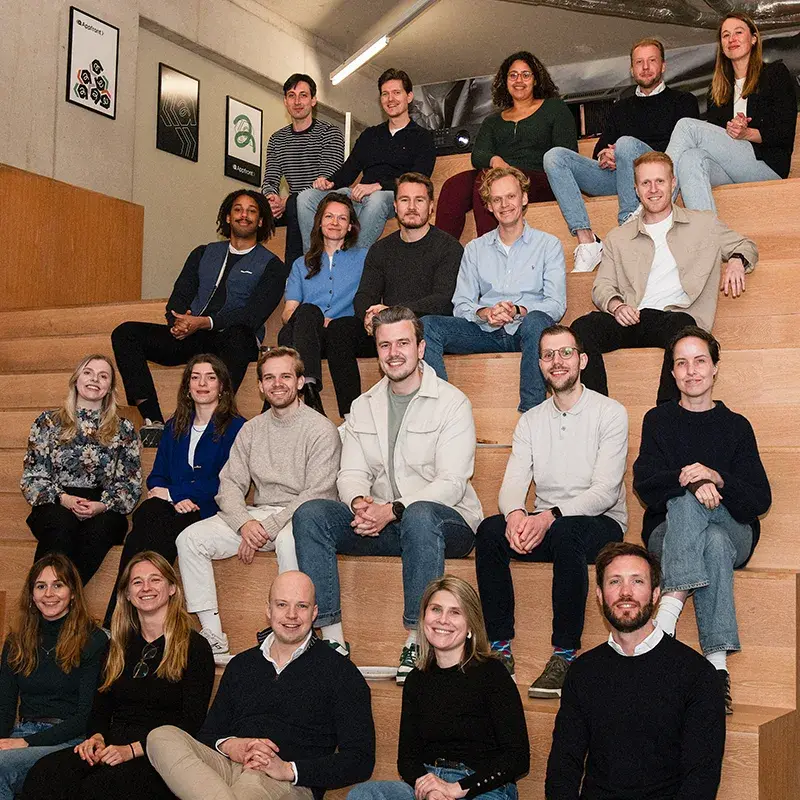
Stef is your first point of contact. In the initial conversation, we discuss which task AI will take over, what images or documents are available, and who will manage it.
E-mail info@datasciencelab.nl
Phone +31 (0)20 3636 724
Tell us what the task involves, which cameras, systems or documents are used, and who currently carries out the checks. We’ll reply by email or arrange an initial conversation.
Message sent
Thanks for your message. We’ll be in touch as soon as possible.
If you’re looking for an AI company or AI agency in the region, you probably want something that works: software that takes over counting and inspecting using camera images, extracts data from work orders, or acts as an agent to carry out a step in the order process. We build and maintain these solutions as part of our AI solutions.
If you first want to find out where AI delivers value, read about our AI consultant in Eindhoven. For predictive models based on machine data, there’s our data science agency in Eindhoven.
No. GVB operates public transport in and around Amsterdam. The GVB case study is included here because it shows how computer vision works with cameras that are already in place, as is often the case in factory halls.
We don’t currently have any published case studies from Eindhoven or Brainport. Our office is in Amsterdam; we visit companies in the region or meet online.
A model learns what to recognise from labelled example images: a person, a component or a scratch. It then counts or classifies new images. At Floating Farm, this involved real-time image classification in Python.
Quality depends mainly on lighting, camera position and having enough examples of the defect you want to detect. Read more about computer vision.
The model then sees images that differ from those it was trained on, and its performance can decline without anyone noticing. That’s why, after launch, we monitor for changes in the input and results, and retrain the model with new examples.
Read about how we organise model versions, monitoring and new training cycles in MLOps.
Yes. A model or language model extracts data from documents and prepares it for use in your system, or compares it with what you expect. At Fokker Services Group, our model compares the actual invoice amount with the amount it expects based on the work delivered.
Read more about this approach in document processing with AI.
A model performs one defined task, such as assessing an image. An agent uses a language model to carry out several steps in sequence, calling on systems such as an ERP or a folder of drawings as needed. This suits work where the steps differ from case to case, such as investigating a customer’s question about an order.
If the task involves an approval or an order, we have the agent prepare a proposal for an employee. See agentic AI.
That depends on how the images may be used and how quickly you need a result. If images cannot leave the factory, or the production line must respond immediately, the model runs on a server on site. For analyses across multiple locations, a cloud platform such as Azure or Databricks is more likely to make sense.
In either case, we agree in advance who will handle updates, monitoring and retraining.
When a fixed threshold, a sensor or a check in your ERP or MES already handles the task. Or when no one records rejected products and faults, leaving nothing against which to measure a model. In that case, start recording them.
If you first want to determine where AI will deliver the most value, take a look at the AI scan for manufacturing.