
Insights into the Week van Respect through smart social media monitoring and LLM-based sentiment analysis.
Respect Foundation

We build one agent for one task, with defined permissions and human approval for actions. For the Respect Foundation, our LLM analysed messages.
Through our Data For Good initiative, we helped the Respect Foundation understand the online impact of Week van Respect with social media monitoring and an impact analysis.
A language model gives answers; an agent also takes action: it reads an inbox, searches systems and prepares an action. That works when the task is narrowly defined, permissions are set and an employee approves before anything changes.
It is documented what the agent does, when its task is complete and when it brings in a colleague because of uncertainty or an exception.
For each tool, it is defined whether the agent can only read or can also write. The source system itself, not the language model, determines what the agent is allowed to do.
For the Respect Foundation, our LLM analysed the sentiment of social media posts. Reading and assessing text is often an agent’s first step.
Every step, tool call and approval is recorded. This lets you see model usage for each completed task and where the agent got stuck.
With the person currently doing the task: what inputs are involved, which systems, what exceptions arise, and who signs off?
A fixed set of real and challenging cases, including misleading input, is run whenever the instructions, tools or model change.
First, the agent makes suggestions alongside the team. If they are sound, it prepares actions for an employee to approve.
The task comes up often, involves reading and weighing up messy input such as emails, forms or documents, and someone familiar with the work can check the result afterwards.
Every step can already be defined by a rule or workflow. Conventional automation is then more predictable and cheaper to manage. It is also not a good fit if no one is willing to take responsibility for the result.
The number of tools and systems, whether the agent only reads or also writes, how many scenarios need testing, whether personal data is involved, and who manages it.
It can only do what its permissions allow. Actions with consequences wait for approval, and every step is recorded in the log. It treats text from emails or documents as data, not instructions.
Choose this if people mainly need answers from documents and nothing needs to change in a system. See how to get an AI chatbot built.
Choose this if the steps are always the same and can be defined by rules. In that case, process automation without a language model is a better fit.
Choose this if the task requires judgement and the agent needs to search systems or prepare something. Our advice: start with one task where a person approves every action.
Data Science Lab has worked with data and AI since 2016 and is a Databricks Partner and Microsoft Partner. On our DSL Agentic Platform, access permissions, logging, human approval and escalation are built into the platform itself.
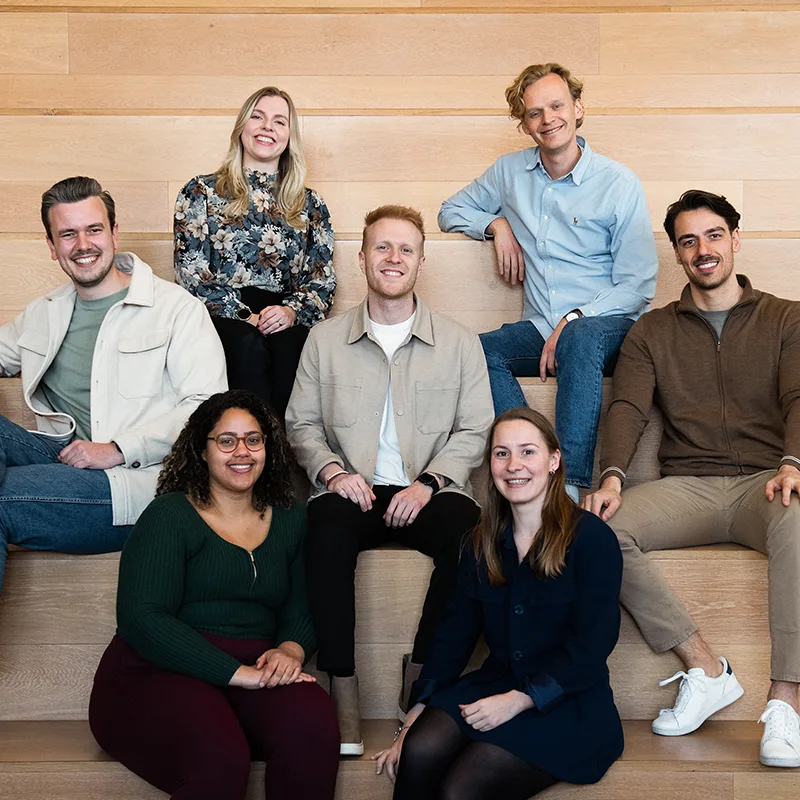
Stef is your point of contact. In our first conversation, we choose the task, the systems and who approves the actions.
E-mail info@datasciencelab.nl
Phone +31 (0)20 3636 724
Describe the task, the systems involved and who signs it off now. We’ll reply by email, or we can arrange an initial conversation.
Message sent
Thanks for your message. We’ll be in touch as soon as possible.
Building your own AI agent starts with the task, not the model. You define what it does, which tools and permissions it gets, when a person needs to approve an action, how you test it and who manages it after launch.
Read more about our broader approach to agents in agentic AI.
As few as the task allows. OWASP identifies three causes of harm involving agents: too many functions, overly broad permissions and too much autonomy. We give each tool only the functions it needs, often starting with read-only access.
The system where an action takes place checks whether it is permitted, using the agent’s or user’s permissions. Actions with significant consequences wait for approval from a member of staff.
With scenarios: a fixed set of real-world cases, each with a defined correct outcome. These also include difficult cases: missing data, conflicting sources or a request outside the agent’s remit.
We assess not just the final result but also the route it took: which tools it called and where it should have stopped. We run the set again after every change.
Prompt injection is input that changes a language model’s behaviour in an unintended way. For an agent, it often comes indirectly through an email, web page or document it reads. Because an agent can also take action, the risk is greater than with a chatbot.
That is why we give it minimal permissions, require human approval for consequential actions and test it with misleading input.
Mainly the number of steps per task. An agent often calls the model several times: to plan, use a tool, read the result and reconsider. Each round uses computing resources.
That is why we measure costs per completed task, not per question. Using a smaller model for simple steps and setting a clear endpoint help keep costs manageable.
An agent can run in your own cloud environment or on the DSL Agentic Platform. According to the platform page, your data and infrastructure remain entirely in your own environment, and all actions and decisions are logged so they can be reviewed afterwards.
Read more about the DSL Agentic Platform.
That depends on the task. If the agent interacts with people, the transparency rules of the AI Act apply from 2 August 2026: people must know they are dealing with AI. Agents used for recruiting, selecting or evaluating employees are classified as high-risk; see AI agents for HR.
If it processes personal data, see DPIA for AI. Ask your legal adviser for a legal interpretation.
When the steps are fixed, the task rarely arises or no one can check the outcome. In those cases, a rule in your existing system, a fixed workflow or simply better work instructions make more sense.
If you are unsure which processes are suitable, start with our online Agentic AI quickscan.