
From AI model to reliable healthcare application with MLOps at LUMC
LUMC

For academic healthcare and life sciences in Leiden: we bring a model into clinical practice and set up its ongoing management, as we did at LUMC.
Together with LUMC, where Cairelab supports AI applications from initial development through to implementation, we are working on the path from experiment tracking and CI/CD to model serving, monitoring and integration with clinical systems, using sovereign on-premise infrastructure.
A PhD researcher trains a predictive model on a restricted dataset on a research server. The department wants to use it, but nobody knows who will maintain it after the researcher completes their PhD. We turn it into an application with an integration, monitoring and an owner.
We first run the model on recent data from the department, not just the research dataset. That lets you see whether the patient population differs before the model is used.
Input from the EHR via FHIR or HL7, and images from the PACS via DICOM. These standards are also part of our work for LUMC.
We record code, data and model versions using tools such as MLflow and Docker, which we also use at LUMC.
We establish in advance who will manage the model when the researcher leaves, who will intervene if the input changes, and when the model will be retrained.
What decision does the model support, which patients was it trained on, and who will use it?
The model processes current data, but its output is not yet shown to the clinician.
Integration with the electronic patient record, monitoring and a designated owner. Your own team then manages the model, or we do.
You have a model that works on historical data, a department wants to use it, and someone is responsible for the clinical question. Or a company at Leiden Bio Science Park wants to put an R&D model into use.
The scientific question is still open, or a product already exists that does the same thing. If you’re not sure where the obstacles are, start with a maturity assessment, as Albert Schweitzer Ziekenhuis did to see where it stood.
The number of models, which integrations with EPD or PACS are needed, whether everything must run on-premises, how often the model is retrained and who manages it. You provide access and a clinical owner.
That’s for your own regulatory or legal department to assess, not us. We document what they can use as evidence: data, model versions, performance and who changed what.
Choose this if the model is still answering a scientific question or has only been tested on historical data. The results are not made available to the treating clinician.
Choose this if a department wants to use the model and you first want to see whether it helps. Our advice: decide in advance who will be responsible for it and when to stop the pilot.
Choose this if several departments rely on the model or it is retrained. In that case, you need monitoring and a designated person to manage it. At LUMC, the results are shown in an easy-to-use application.
Data Science Lab has been building data and AI applications since 2016. We're based in Amsterdam and are a Databricks and Microsoft partner. In healthcare, we've worked with LUMC, Albert Schweitzer Ziekenhuis and Nederlandse Farmaceutische Zorggroep, among others.
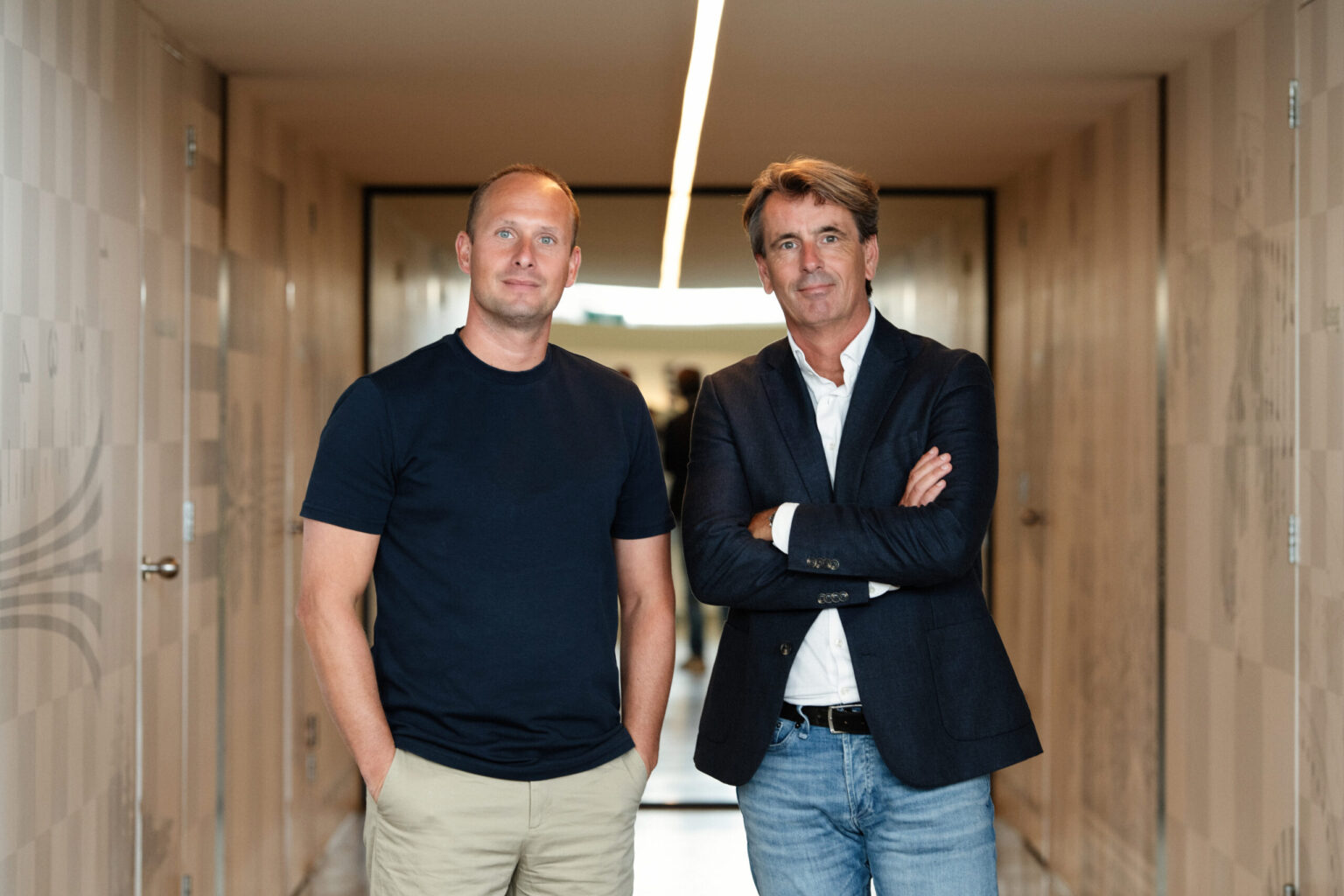
Stef is your first point of contact. In our first conversation, we’ll discuss the model, the data it was trained on and who will use it. We can meet at your offices, at ours in Amsterdam or online.
E-mail info@datasciencelab.nl
Phone +31 (0)20 3636 724
Describe the model and the department that wants to use it. We’ll reply by email or arrange an initial discussion.
Message sent
Thanks for your message. We’ll be in touch as soon as possible.
According to the Rijksoverheid, software is a medical device if its maker intends it for medical use, such as making a prognosis or predicting a disease. The EU Medical Device Regulation (MDR) then applies. According to the Inspectie Gezondheidszorg en Jeugd, it also sets requirements for healthcare organisations that make their own devices.
Your regulatory or legal department determines whether this applies to your model. During development and management, we document what they can use as evidence.
If a notified body must assess the device, the AI system is also classified as high-risk under European guidance MDCG 2025-6. According to that guidance, this does not apply to a device that a healthcare organisation makes solely for its own use. Following the AI Omnibus, those requirements will apply to AI in such regulated products from 2 August 2028.
The legal interpretation is for your lawyer or compliance department. We help you identify your AI systems, prepare their risk classification and set up governance. You can read more about this under the AI Act.
According to the Autoriteit Persoonsgegevens, processing health data is prohibited unless an exception under the GDPR applies. In healthcare, the legal basis is usually set out in law, such as the WGBO. If the law provides no legal basis, the Autoriteit Persoonsgegevens identifies explicit consent as one possibility, for example in scientific research.
Using data from a study for another purpose constitutes a new purpose. Your data protection officer assesses whether that is permitted. We set up the data flows accordingly and keep research and healthcare data separate where necessary.
Yes. The LUMC project runs on on-premise, sovereign infrastructure, with the aim of keeping control of data and models with the hospital. In the cloud, we build on Databricks or Microsoft Fabric.
That choice is also a privacy question. The Autoriteit Persoonsgegevens states that an organisation processing health data in the cloud remains fully responsible for it. The right option depends on the data, the integrations and who manages the system.
If the electronic health record (EPD) supports it, you can retrieve its data via FHIR, an HL7 standard for the electronic exchange of healthcare information. Medical images and their associated data come from the PACS, the medical image archive, via DICOM, the international standard for this.
The result should appear where the healthcare professional already works: in the EPD or in the PACS viewer. That is why we discuss the integration with the first department from the outset, rather than waiting until go-live.
Set this out before the model goes live: who owns it, who intervenes if the input changes and who approves an updated model for release. Your own team can take over, or we can handle it through management and continuous improvement. For how the technology works, read about MLOps.
If the model comes from a collaboration, such as a Medical Delta programme in which LUMC and Universiteit Leiden work with TU Delft and Erasmus MC, among others, also agree which partner will be responsible for its management.
Leiden Bio Science Park identifies AI and data science as a theme spanning all its focus areas, from early diagnosis to vaccines. If a model comes from R&D rather than a clinical setting, the questions remain the same: is it reproducible, where does it run, who manages it and which rules apply?
We do not have a case study of our own at Bio Science Park; our references are in hospitals and pharmacies. For Nederlandse Farmaceutische Zorggroep, we built a virtual assistant using information from contracts with health insurers. “The NFZ Virtual Assistant has significantly improved our customers’ workflow.” Alberto Fernandez, Project Pharmacist - NFZ
When the department has not asked for it, an existing product does the same thing, or the model has only been tested on a small, outdated dataset. In those cases, buying a product, validating the model first or stopping is more sensible than building.
If you are unsure whether the problem lies with the data, processes or organisation, start with a data maturity assessment. At Albert Schweitzer Ziekenhuis, such an assessment mapped where the hospital stood, from culture and processes to technology and governance.