
Using space more efficiently in the port of Amsterdam with our smart tool for tracking berth use
Port of Amsterdam

From Westerdoksdijk, we start with the decision you need to improve, then build and manage the solution, as we did for Port of Amsterdam.
Port of Amsterdam manages and develops Amsterdam’s port, where space is scarce. Together, we used Databricks, real-time data and Power BI to develop a tool that measures historical berth usage, so policymakers can make decisions based on figures rather than gut feeling alone.
The data is often already there: ship movements, reports from public spaces, audience numbers for each performance. Yet someone is still making decisions based on experience. Together, we identify one decision, test a model against your own historical data and only then build on it.
For Port of Amsterdam, a tool we developed together measures historical berth usage, providing a basis for decisions by ship type.
At Nationale Opera & Ballet, we assessed data maturity and developed a growth plan that links data to full auditoriums and a broader audience.
We build on Databricks or Microsoft Fabric. As a partner of both, we choose based on your IT landscape, without a preference either way.
Data changes constantly. That’s why, after delivery, we monitor whether a model remains accurate and agree on who will adjust it.
Which decision needs to improve, who makes it now and what data do they use? That’s where the project starts.
An initial version runs on your own data, so you can see whether AI adds value.
The application goes into the system you already use, with monitoring and a designated owner.
There’s a recurring decision currently made based on experience, the relevant data already exists, and someone in your organisation is willing to take ownership of the application.
You first want to understand where your organisation stands with data. A data maturity assessment is a better fit in that case, as it was for Nationale Opera & Ballet. Or a dashboard may be enough, and we’ll tell you if it is.
How many source systems need to be connected, the quality of the data, whether the application needs to work in real time, and whether your team or ours will manage it.
We assess Databricks and Microsoft Fabric against your organisation’s needs and existing IT landscape. If you already use Microsoft, Fabric is often a logical choice; we’ll make the decision together.
Choose this if you’re not sure where your organisation stands. The assessment gives you a report with the next step for each area, as it did for Nationale Opera & Ballet.
Choose this if the decision you need to make and the data are already clear. Our advice: pick a recurring decision so you can quickly see whether the model helps.
Choose this if you’re building it yourself but lack capacity. Through secondment, one of our AI engineers or data engineers works as part of your team.
Data Science Lab has worked with data and AI since 2016 and is a Databricks and Microsoft partner. In Amsterdam, we’ve worked for Port of Amsterdam and Nationale Opera & Ballet, among others. Drop by, or we’ll come to you.
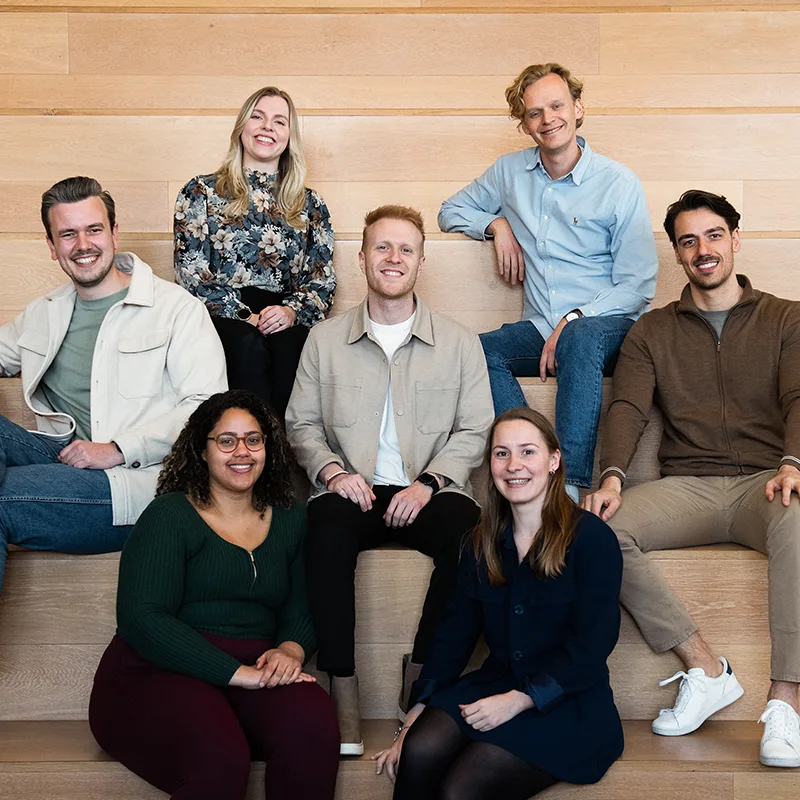
Stef is your first point of contact. In our first conversation, we’ll choose one decision that needs to be made better, either at our office on Westerdoksdijk or online.
E-mail info@datasciencelab.nl
Phone +31 (0)20 3636 724
Describe the decision and the data you already have. We’ll reply by email or arrange an initial conversation.
Message sent
Thanks for your message. We’ll be in touch as soon as possible.
An AI agency builds applications that support a decision or task in your organisation: a predictive model, an assistant based on language models or an agent that handles a process. Data Science Lab is an AI company in Amsterdam and has been here since 2016.
We start with what you want to improve, not the technology. You can read about the types of applications we build on our AI applications page.
Our office is at Westerdoksdijk 599/601 in Amsterdam. You can call, email or drop by. We can also meet at your office or online.
We work with organisations across the region and beyond. In Amsterdam itself, we’ve worked with Port of Amsterdam and Nationale Opera & Ballet, among others.
There’s an overlap. AI consultancy helps you decide which application will deliver value, what it requires and in what order to proceed. An AI agency also builds the application, connects it to your systems and manages it. We do both, often within the same project.
You can read how we prepare those decisions on our AI consultancy and AI roadmap pages.
Three types come up most often: generative AI that supports employees with knowledge work, predictive models that help organisations look ahead, and AI agents that take over steps in a process.
If your question is mainly about predictive models built on your own data, you can also read about data science.
It often starts with insight. For Port of Amsterdam, we made historical berth usage accessible so policymakers can decide whether to increase or decrease the number of berths for certain types of vessels. We only add a model if looking ahead brings something useful.
Episode 6 of our podcast De Databar covers the opportunities and challenges of data in the Port of Amsterdam. You can read more about shipping and AIS data on our AI in ports and maritime page.
The AI Act is being introduced in phases. According to the European Commission, the prohibited practices have applied since 2 February 2025, and following the AI omnibus, the requirements for high-risk applications listed in Annex III will apply from 2 December 2027. If you work for or with Amsterdam City Council, it publishes descriptions of its algorithms in the government’s Algorithm Register.
Your legal counsel or compliance department should interpret the legal requirements. We can help you identify your applications, classify their risks and set up governance; see AI Act.
Agree on that before it goes live: who owns it, who gets an alert when the input changes and who approves a new version. Data changes constantly, so a model that works well now may become less accurate later.
Your own team can manage it, or we can do so through management and continuous improvement. You can read how model monitoring and retraining work on our MLOps page.
If you mainly want to know what happened last month, a Power BI dashboard is enough. The same applies if no one in your organisation is willing to own the application. We’ll tell you that, too.
If you’re not sure where you stand, start with a data maturity assessment. For Nationale Opera & Ballet, this led to a plan for growth. “Data Science Lab’s expertise immediately gave us the confidence to take a broad approach to the project.” Leon Backbier, Head of I&I