
Reducing churn through advanced data analysis
DPG Media

AI advice for broadcasters, publishers, production companies and event organisers, backed by your own audience data, such as the subscriber data in our churn analysis for DPG Media.
We analysed how digital subscribers use two DPG Media brands, using Python, SQL and dbt. “Working with DSL enabled us to turn our data into actionable steps, leading to targeted and effective campaigns and activations.” Mascha Wijker, Communication Manager
Through Media Campus NL at Media Park, NPO, DPG Media, Talpa and Mediahuis have already drawn up initial guidelines for AI labels. What you do with AI depends mainly on your own archive, audience data and production process. You can get started now.
Usage data can show which subscribers are less likely to cancel. For DPG Media, we identified these patterns among digital subscribers to two brands.
For See Tickets, we brought ticketing and behavioural data together on Azure and developed recommendation models to predict which event would suit each visitor.
For Harman’s international prize campaigns, we developed a selection process using an LLM to assess entries in a reproducible way.
For the Respect Foundation, we used a social media monitoring tool to show reach and sentiment around Week van Respect. Our LLM analysed the sentiment.
For example, which subscribers are leaving, which clips creators cannot find again, or which submissions a jury needs to see.
What usage, archive or campaign data is available, what metadata is missing, and which questions about rights your lawyer needs to answer.
The editorial or marketing team reviews the output before it goes public. We document who is responsible.
You have subscriber, viewing, listening or ticket data, an archive, or a stream of submissions and comments, and your editorial, marketing or programming team has a question you cannot yet answer with those resources.
You only need a tool to create individual texts or images; an existing product is often enough. Or the question can be answered with a dashboard of your viewing or subscriber figures.
The number of sources, such as your subscriber system, ticketing, archive catalogue and social media channels; the quality of the metadata; the rights to the material; and whether the application will remain in production afterwards.
Your lawyer or rights department decides whether material from creators or the archive can be used in an AI application. So record what the application uses from each source; that allows each source to be assessed separately.
Choose this if creators struggle to find clips or material arrives without a description. Transcriptions and automatic descriptions make it searchable; the rights for each clip determine what you can do with it.
Choose this if you have subscriber, viewing or ticket data and want to know who is dropping off or what someone wants to watch next. Our advice: start where the data is already in good shape.
Choose this if editorial or production teams spend a lot of time on recurring tasks, such as summarising, translating or reviewing submissions. You can support this work with generative AI.
Since 2016, Data Science Lab has worked on data and AI from Amsterdam as a Databricks and Microsoft partner. On De Databar, our Dutch-language podcast about data science and AI, our colleagues talk with guests.
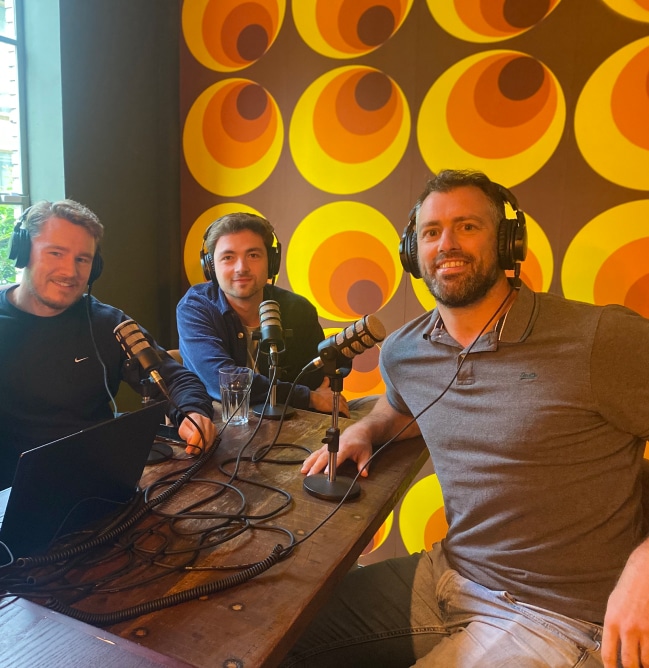
Stef is your first point of contact. In our first conversation, we’ll look at your question, the data or archive involved, and who will check the outcome. We can meet at your office, ours or online.
E-mail info@datasciencelab.nl
Phone +31 (0)20 3636 724
Describe your question and the data or materials related to it. We’ll reply by email or suggest an initial conversation.
Message sent
Thanks for your message. We’ll be in touch as soon as possible.
Not every one. Since 2 August 2026, the transparency obligations in Article 50 of the AI Act have applied to those using AI. If you use AI to create or alter an image, audio or video that qualifies as a deepfake, you must disclose that the content is artificial. For clearly artistic, creative, satirical or fictional work, a disclosure that does not interfere with the work is enough.
You must also disclose AI-generated text that informs the public about matters of public interest, unless a person has reviewed it and someone holds editorial responsibility. Through Media Campus NL, NPO, DPG Media, Mediahuis and Talpa developed guidelines for AI labels on images, audio and video, with different approaches for news and for fiction and entertainment.
Your legal or compliance team decides how to interpret the rules. We map where AI is used in your productions and workflows and document the arrangements; read more on our AI Act page.
Speech recognition turns spoken words into transcripts, while image and language models suggest descriptions, names and topics. You can then search for what is said and shown, not just for titles. Record which descriptions a person has checked and what rights apply to each clip.
Beeld & Geluid at Media Park, which manages archives for public broadcasters among others, points to the long-term implications in its archAIve project: what you document or leave out affects the algorithms of the future.
Primarily, which usage patterns are associated with staying or cancelling. For DPG Media, we identified these patterns among digital subscribers to two brands. DPG Media could then take targeted action, such as personalised communication and product changes. Read the case study.
An important decision is how you define churn. In the analysis described in our blog on churn analysis, subscribers who returned quickly, for example after cancelling to get a discount, were not counted as churned subscribers. We then segmented subscribers by subscription type, length of relationship and activity.
Often through a hybrid approach, like our Recommender: content-based filtering looks at the characteristics of what someone previously chose, while collaborative filtering looks at what similar users did. You also set rules, such as which titles or events must never be recommended.
For See Tickets, we brought ticket and behavioural data together and developed self-learning recommendation models, enabling See Tickets to give fans personalised recommendations well after an event. We tested the recommendations in practice. Read the case study.
Yes, if you define the assessment criteria beforehand and have a person check samples. For Harman, we used GenAI, prompt engineering and OpenAI to develop a selection process that assessed entries for international prize campaigns consistently. Read the case study.
For the Respect Foundation’s Week van Respect, our LLM analysed the sentiment of social media posts alongside their reach. We did this under our Data For Good label. Read the case study.
Agree in advance what an experiment needs to demonstrate, then make a deliberate decision: stop, adapt or scale up. At the first AI Lunch Session hosted by Media Campus NL in September 2026, a former leader of AI experiments at NPO described how AI moderation of comments helped editorial teams.
Another project was stopped because testing showed that an approach without building AI in-house delivered more value. You document a decision like that in an AI roadmap.
That depends on how you set it up: which sources an application may use, who can access them and where the data is stored. With our internal assistant Joost, you decide what is available for each source and each user.
Media Campus NL identifies dependence on major technology companies and rules around data, rights and sensitive information as major questions for the sector. As a broadcaster or publisher, you need to answer them for each application before putting any material into it.
When a good dashboard based on your viewing, listening or subscriber figures already answers the question, or when a feature in your existing editing or editorial software does the job. You do not need a consultancy project for a single piece of text or image either.
If you already know what you want to build and only need extra capacity, bringing in a data scientist or AI engineer on a temporary placement makes more sense.