
A generic monitoring package for machine learning models developed for Rijkswaterstaat
Rijkswaterstaat

We build pipelines that give models and reports the same data, and measure what changes. For Rijkswaterstaat, we developed a generic monitoring package.
Rijkswaterstaat put several AI models into production. Manual monitoring for data drift and prediction drift doesn’t scale, so we developed a package for detecting drift and outliers using Python, Alibi Detect and Pydantic, among other tools. “DSL came up with an inventive solution that we can put to good use.” Nanine Overgaauw, Rijkswaterstaat - SRE Data Science
At large organisations in and around Utrecht, asset registers, measurement networks, case management systems and planning systems all feed reports and models. If a column or unit changes, the model simply keeps running. We build pipelines that block such changes and make them visible.
Each source is ingested unchanged first. The pipeline then checks columns, types and rules. For Fokker Services Group, data quality checks are built into the data platform.
You document what a model receives and returns. This provides the basis for monitoring, such as the package for drift and outlier detection for Rijkswaterstaat.
Pipelines and infrastructure move from development to production as code. For SNG, we automated the release process through the DTAP stages, using Terraform among other tools.
For Vivara, we developed a data platform that retrieves data daily from sources including SAP, Magento and SharePoint, with one data model for all departments.
We trace one model back to every table and system that feeds it, and identify who owns each one.
Pipelines with schema checks and data quality rules, plus a table of the model’s inputs and outputs.
The next model or report uses the same data ingestion. Your team then manages it, or we do.
Several models or reports rely on data from many systems, ingestion has been built separately for each project, and no one notices when a source changes. You’re based in or near Utrecht and want a team that can visit you.
You’re looking for a data engineer to work temporarily alongside your own team: secondment is a better fit. If nothing is running on the data yet, start by asking which decision needs to improve.
The number of sources and models, whether a platform is already in place, how often the data is refreshed, the security requirements and how much of the management your own team will handle.
We build on Databricks, Microsoft Fabric or the environment you already have, choosing what fits your existing IT landscape. We agree on documentation and management arrangements in advance.
Choose this if one system causes the error and its administrator can fix it, for example by making a field mandatory or setting a standard unit of measurement in the asset register.
Choose this if multiple models and reports use the same source. A schema check or data quality rule then catches the error once, for everyone.
Choose this if the data is technically correct but real-world conditions are changing. Our advice: measure drift in the model inputs alongside pipeline checks, not instead of them.
Data Science Lab has worked in data and AI since 2016, based in Amsterdam. We have built data platforms for Fokker Services Group and Vivara, among others, and share knowledge in our lab and at Techdays.
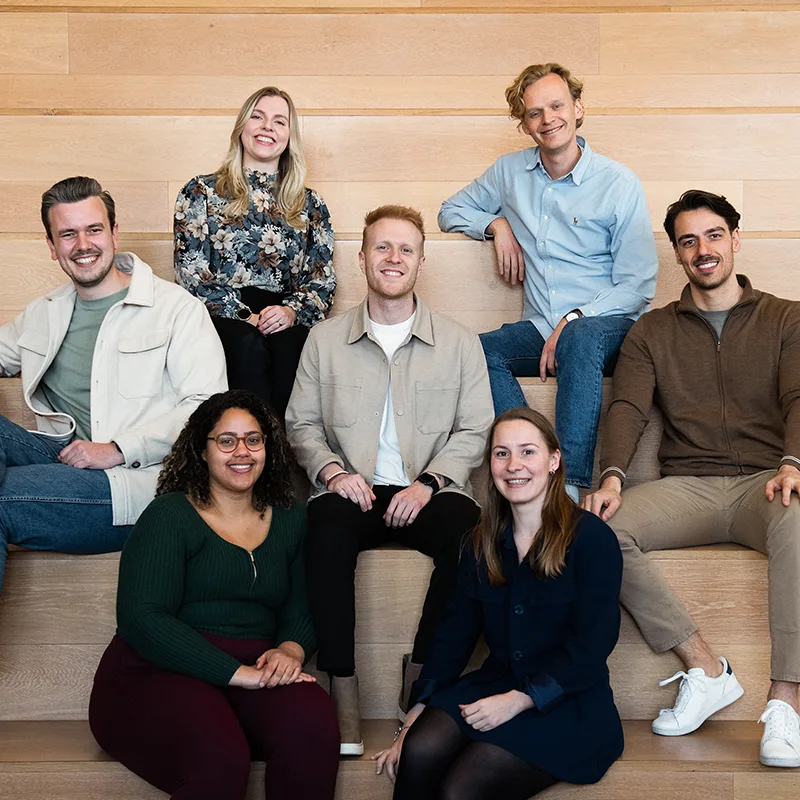
Stef is your first point of contact. In our first conversation, we’ll discuss your sources and models, at your offices in Utrecht, in Amsterdam or online.
E-mail info@datasciencelab.nl
Phone +31 (0)20 3636 724
Tell us which systems, models and platform you use. We’ll reply by email or arrange an initial conversation.
Message sent
Thanks for your message. We’ll be in touch as soon as possible.
It makes sure data from all your systems comes together reliably in one place, through pipelines and a platform it designs, builds and maintains. Models in production need more: the same data for training and production, checks during ingestion and a defined model input. The models themselves fall under data science. Read more about data engineering.
If you’d rather have a data engineer from Utrecht or the surrounding area on your own team, you can hire a data engineer. They remain employed by us.
Because the model makes predictions based on what it saw during training. If a source system is replaced, a unit changes from metres to centimetres, or a column takes on a different meaning, the model keeps producing results, but they become less accurate. Nobody gets an error message.
That’s why checks belong at ingestion. Delta tables on Databricks enforce the schema when data is written: columns the table doesn’t recognise are rejected, and data types must match. Schema changes then become deliberate. You can validate data arriving as a file or through an API in Python with Pydantic.
By storing the input and output of every prediction alongside the training data. On Databricks, inference tables do this: they record the requests and responses of a model serving endpoint in a Delta table in Unity Catalog. You can then use data profiling to track performance and data drift.
Rijkswaterstaat has several AI models in production. For these, we developed a general-purpose package for drift and outlier detection, using tools including Alibi Detect, a Python library for outlier and drift detection. Read the Rijkswaterstaat case study or learn more about MLOps.
With lineage: a record of which queries and files populate a table, which jobs and notebooks modify it, and which dashboards and model versions use it. Unity Catalog records this automatically for queries on Databricks, down to column level. If the owner of a source wants to remove a column, you can see in advance who will be affected.
Without a catalogue like this, you can keep a list for each pipeline, but it quickly goes out of date. Read more about setting up Unity Catalog.
For high-risk AI systems, Article 10 requires training, validation and testing data to be subject to appropriate data governance and data management practices. The datasets must be relevant, sufficiently representative, as free of errors as possible and complete in view of their intended purpose. Pipelines that record where data comes from help demonstrate this.
Under the AI Omnibus, the requirements for Annex III will not apply until 2 December 2027. We can help you take stock of your models; whether yours is high-risk is for your legal counsel or compliance team to decide. Read more about the AI Act.
That depends on your existing IT landscape. We build on Databricks and Microsoft Fabric. At Fokker Services Group, we’re building a data platform using Databricks, Azure and dbt, among other tools, modelled on the medallion architecture. Read how bronze, silver and gold together form a lakehouse in building a data lakehouse.
If you’re mainly bringing together structured sources and exports, and won’t run models on the platform, a data warehouse is often enough.